

Keynote Speakers
Neoteric Frontiers in Cloud and Quantum Computing.
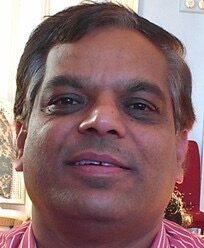
Prof. Rajkumar Buyya
Director, Cloud Computing and Distributed Systems (CLOUDS) Lab,
The University of Melbourne, Australia
CEO, Manjrasoft Pvt Ltd, Melbourne, Australia
ABSTRACT: The twenty-first-century digital infrastructure and applications are driven by Cloud computing, Internet of Things (IoT), Artificial Intelligence (AI), and Quantum computing paradigms. The Cloud computing paradigm has been transforming computing into the 5th utility wherein “computing utilities” are commoditized and delivered to consumers like traditional utilities such as water, electricity, gas, and telephony. It offers infrastructure, platform, and software as services, which are made available to consumers as subscription-oriented services on a pay-as-you-go basis over the Internet. Its use is growing exponentially with the continued development of new classes of applications such as AI-powered models (e.g., ChatGPT) and the mining of crypto currencies such as Bitcoins. To make Clouds pervasive, Cloud application platforms need to offer (1) APIs and tools for rapid creation of scalable and elastic applications and (2) a runtime system for deployment of applications on geographically distributed Data Centre infrastructures (with Quantum computing nodes) in a seamless manner. This keynote presentation will cover (a) 21st century vision of computing and identifies various emerging IT paradigms that make it easy to realize the vision of computing utilities; (b) innovative architecture for creating elastic Clouds integrating edge resources and managed Clouds, (c) Aneka 6G, a 6th generation Cloud Application Platform, for rapid development of Big Data/AI applications and their deployment on private/public Clouds driven by user requirements, (d) experimental results on deploying Big Data/IoT applications in engineering, health care (e.g., COVID-19), deep learning/Artificial intelligence (AI), satellite image processing, and natural language processing (mining COVID-19 literature for new insights) on elastic Clouds, (e) QFaaS: A Serverless Function-as-a-Service Framework for Quantum Computing; and iQuantum Simulation Toolkit, and (f) new directions for emerging research in Cloud and Quantum computing.
Learn more about Prof. Buyya, please visit his Cyberhome.
Exploring Quantum Computation: Understanding the practical challenge for cybersecurity and identifying opportunities for new solutions.

Michael Egan
Director, Quantum Technologies,
KPMG Australia.
ABSTRACT: With a global perspective and an Australian lens, this short talk will cover the significant challenge of implementing quantum resistant cryptography in response to the potential impact of Shor’s and Grovers algorithms. Then from the perspective of an end user of quantum computation, we will consider milestones of development and public examples of industry exploration in the application of quantum computation.
Learn more about Michael, please visit Micheal’s Profile.
Post Quantum Cryptography for Blockchains.

Sushmita Ruj
Faculty of Engineering Lead of UNSW Institute for Cybersecurity, IFCYBER,
Associate Professor in the School of Computer Science and Engineering,
UNSW, Sydney.
ABSTRACT: In this talk we will address why Post Quantum Cryptography is crucial for blockchains. We will present an overview of cryptographic algorithms that should be replaced by PQC alternatives, and the challenges in this transition. We will also discuss the progress in signature schemes, commitment schemes and zero-knowledge proofs that can help design quantum safe blockchains.
Learn more about Sushmita Ruj, please visit her Homepage.
From Quantum Connectivity to Quantum-Native Artificial Intelligence.
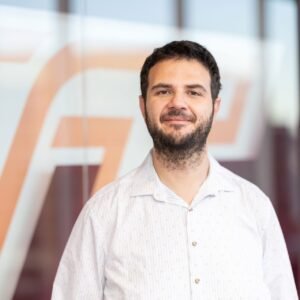
Prof. Walid Saad
Virginia Tech Research Center – Arlington,
Arlington, VA, USA.
ABSTRACT:Quantum technologies are poised to transform next-generation communication and artificial intelligence (AI) systems. This talk explores two key directions: (a) scaling quantum communication networks (QCNs) and (b) designing quantum-native reinforcement learning algorithms. Scaling QCNs across nodes and geographies remains a critical challenge for realizing a quantum Internet (QI) that integrates quantum security, computing, and machine learning. We examine quantum repeater networks (QRNs), that form the backbone for large-scale QCNs, with a focus on how to scale repeater counts and spacing to manage probabilistic entanglement operations while maintaining quality-of-service. We then investigate free-space optical (FSO) quantum channels, where reflective intelligent surfaces (RISs) can mitigate environmental obstacles in settings lacking conventional infrastructure. Beyond connectivity, enabling effective collaboration among distributed artificial intelligence (AI) agents emerges as a second major challenge-one where quantum technologies can offer transformative advantages. Existing multi-agent reinforcement learning (MARL) methods, including recent quantum MARL frameworks, typically rely on classical information exchange, limiting scalability and efficiency. To overcome this, we introduce entangled quantum multi-agent reinforcement learning (eQMARL):a quantum-native AI framework where quantum entanglement forms the core mechanism for coordination. In eQMARL, a quantum-entangled split critic links local observation encoders via entangled qubits, removing the need for explicit data sharing and reducing classical communication overhead. Joint quantum measurements enable coordinated policy updates with far fewer centralized parameters. Experiments show that eQMARL improves convergence tiem and achieves higher scores than classical and quantum baselines, and reduces centralized parameters significantly compared to the split classical baseline. We conclude the talk with an overview on important open problems in these areas, as well as some of our ongoing research activities.
Learn more about Walid Saad, Please visit his Homepage.
Federated Learning in the Generative AI Era.
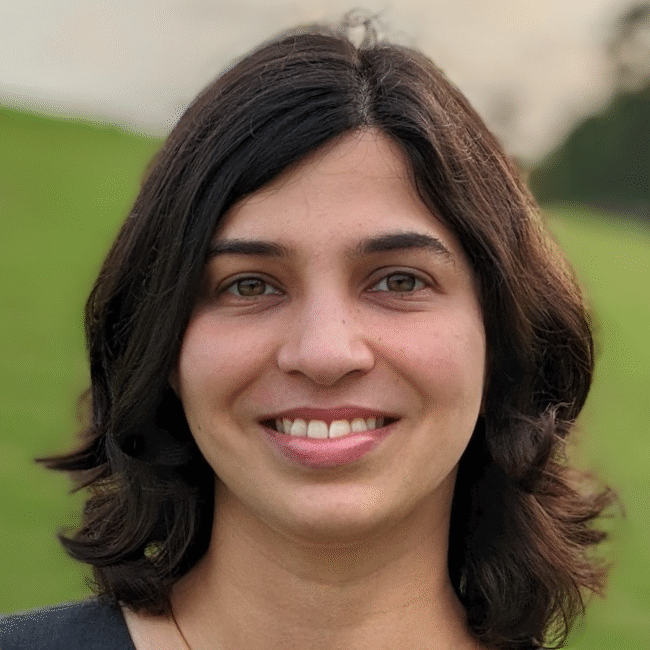
Gauri Joshi
Associate Professor,
ECE Dept, Carnegie Mellon University, USA.
ABSTRACT: Large language models (LLMs) have not yet effectively leveraged the vast amounts of data available on edge devices. Federated learning (FL) offers a promising way to collaboratively fine-tune LLMs without transferring private edge data to the cloud. To work within the computation and communication constraints of edge devices, recent research on federated fine-tuning of LLMs uses low-rank adaptation (LoRA) and similar parameter-efficient methods. LoRA-based methods suffer from accuracy loss in FL settings, primarily due to data and computational differences across clients. In this talk, I will discuss an adaptive multi-head LoRA method that balances parameter efficiency and model expressivity by reparameterizing weight updates as the sum of multiple LoRA heads. Link to our related NeurIPS 2025 paper: https://www.arxiv.org/pdf/2506.05568.
Learn more about Guari Joshi, please visit her Homepage.
Advancing Practical and Robust Quantum Machine Learning.
Chandra Thapa
Research Scientist,
CSIRO Data61, Australia.
ABSTRACT: Quantum Machine Learning (QML) offers powerful capabilities but is limited by today’s NISQ hardware, which is limited in qubit count, prone to errors, and costly to handle high-dimensional data. As a result, research focuses on high-level architectural and algorithmic advancements to make QML more efficient, secure, and suitable for real-world applications. Hybrid schemes like Hybrid Quantum Split Learning (HQSL) combine classical clients with quantum backends, allowing edge or IoT devices to access quantum benefits without needing extensive local resources. Resource-aware encoding and dimensionality reduction techniques, such as Quantum Principal Geodesic Analysis and Approximate Amplitude Encoding, aim to compress complex data into fewer qubits and shallower circuits while remaining resistant to noise. Security and robustness are enhanced through quantum-aware defences, including noise-based layers in hybrid schemes that obscure intermediate representations from reconstruction attacks. Variational quantum classifiers demonstrate greater robustness to adversarial perturbations than classical baselines, supported by theoretical lower bounds on adversarial error. Together, these developments drive QML toward scalable, resilient, and practical real-world use.
Learn more about Chandra Thapa, please visit his Homepage.
Data Integrity Verification for Edge Computing- Fundamentals, Current Status, and Challenges.
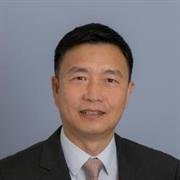
Yong Xiang
Professor,
School of Information Technology,
Deakin University, Australia.
ABSTRACT: Edge computing has enabled application vendors to offload a wide range of services to distributed edge servers, providing low-latency access for data-intensive applications such as autonomous vehicles and smart cities. However, data cached at edge servers is susceptible to both malicious tampering and unintentional corruption, making periodic edge data integrity (EDI) verification essential. This talk will provide an overview of EDI verification, covering its fundamentals, recent advancements, and open research challenges. Firstly, I will introduce the background and motivation behind this area, highlighting the unique challenges in EDI. Secondly, I will explore the state-of-the-art progress on EDI verification, including an overview of system models, key research directions, and notable existing solutions. Finally, I will point out the open research challenges and potential solutions in EDI verification.
Learn more about Yong Xiang, please visit his Homepage.
Quantum Methods for Securing Remote Devices.

Dr. Jesse Laeuchli
Senior Lecturer,
Computer Science and Engineering,
UNSW, Australia.
ABSTRACT: Software-based remote memory attestation is a method for determining the state of a remote device without relying on secure hardware. In classical computing devices, the method is vulnerable to proxy and authentication attacks, because an infected device has no means of preventing the leak of its cryptographic secrets. In this talk we demonstrate how these attacks can be mitigated by making use of quantum effects, while remaining within the class of software-based methods. In particular, we make use of entanglement and the inability of an attacker to clone qubits. Our proposed protocol is lightweight and can be implemented by near-term Quantum Computing techniques.
Learn more about Jesse Laeuchli, please visit his Homepage.
Engineering Smart and Secure Edge-based IoT Systems with Workflow Technology.

Xiao Liu
Associate Professor,
Software Engineering,
Deakin University, Australia.
ABSTRACT: Edge computing has become the mainstream platform for smart IoT systems. However, there are still many open challenges such as resource management and computation offloading, edge intelligence, security and privacy issues. In this talk, I will use an edge-based smart UAV delivery system (named UAV-EXPRESS) as a typical example to introduce our recent studies on engineering edge-based smart IoT systems using workflow technologies. I will briefly touch on the simulation tool, the workflow execution engine, the security framework, and the device-edge-cloud collaborative learning models which are the key components for engineering smart and secure IoT systems in the edge.
Learn more about Xiao Liu, please visit his Homepage.
Cybersecurity Threats and Defences for AI Systems
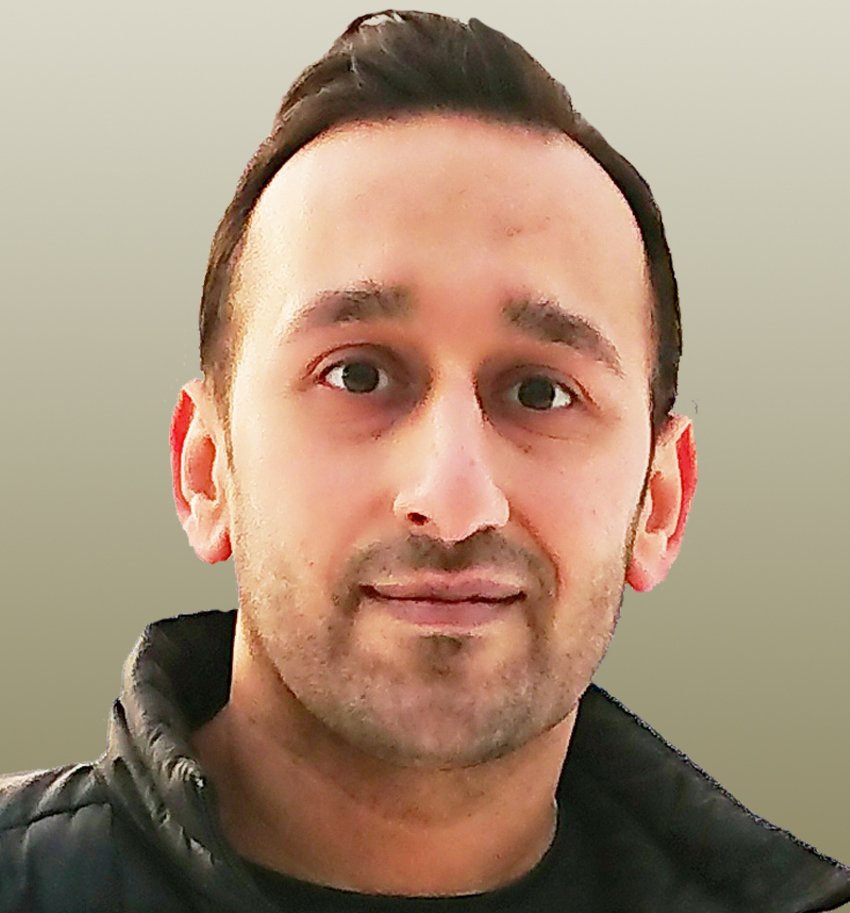
Mohammed B. Alshawki
Associate Professor,
Cybersecurity,
Eötvös Loránd University – Faculty of Informatics, Budapest.
ABSTRACT: This talk presents a cybersecurity-focused view of AI systems, combining academic research insights with practical industry experience. It discusses how AI introduces new attack surfaces that can be exploited through adversarial attacks, data poisoning, and inference-based techniques such as gradient-based data extraction, model inversion, and membership inference, leading to risks to confidentiality, integrity, and availability. The talk also presents defenses from both research and practice, including robust training methods, adversarial resilience techniques, privacy-preserving mechanisms, and operational security controls for deployed models. By linking established cybersecurity principles with current advances in AI security, the talk provides a clear and actionable understanding of how to assess and mitigate risks when deploying AI systems in adversarial environments. homepage–> https://malshawki.github.io/